Telling the sky from the glass
Dear Watchers,
Nobody pays you to write code anymore. They pay you to tell the sky from the glass.
Everything else (vibe-coding as salvation, vibe-coding as ruin, the improvised tribunals on Steam and at Gamescom) is noise around the telescope. I learned the craft with Perl, Python, Ruby, and C. Friction is part of the price. So when an instrument removes friction, I don’t confuse leverage with magic. I look. And I check what I’m seeing.
A telescope, not an oracle
In the seventeenth century, the astronomer slowly stopped being only the person who measured angles with the naked eye. The telescope enriched the sky (moons of Jupiter, lunar relief) and warped it at the same time. The craft shifted: you no longer only execute a measurement, you interpret an image. Seeing more also means telling a sunspot from a bubble in the glass. Scholars gained access to phenomena once reserved for a few; observational standards exploded. And part of the learned world treated the instrument as a cheat against the senses. The anecdote of the colleague who “refused to look” hardened into legend, neater than reality, where early optics really did give people headaches, and where the stakes were not only technical but identity-shaped. When a tool threatens the definition of the craft, rejection disguises itself as a defense of truth.
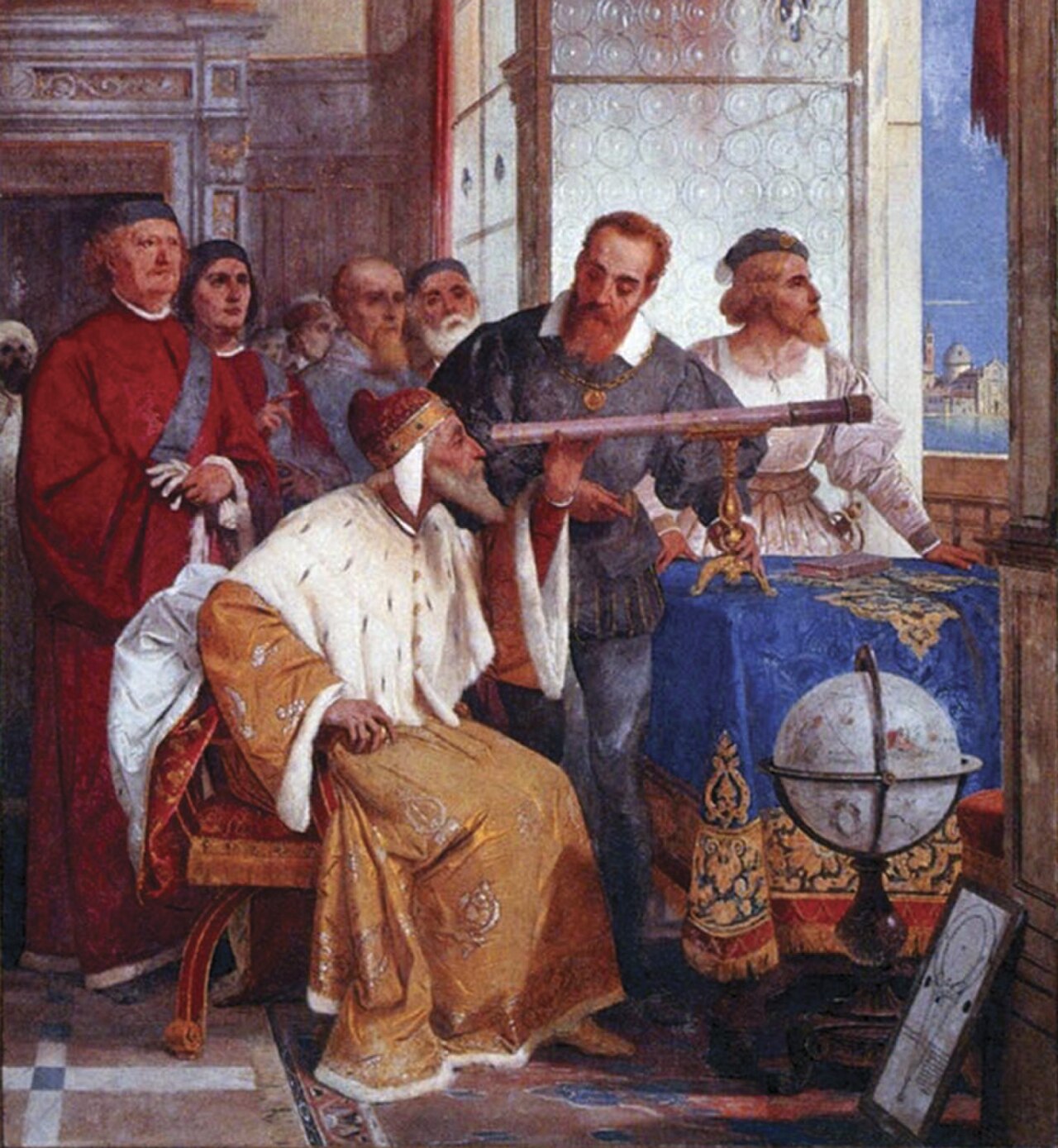
Today, code is our sky.
Code has a sordid advantage over prose: it compiles or it doesn’t. Agents (Claude Code, Codex, and the swarm of orchestrators) chain write, run, fix. This is no longer the 2023 statistical parrot that handed you three functions that had never met a compiler. It is an instrument with a loop, provided you set the criterion.
What the instrument actually buys you (no marketing slide)
Four things. Not twenty.
It compresses the low end: boilerplate, glue, known patterns, first drafts. The time you get back is not leisure; it is budget for the system.
It speeds exploration: several designs in an evening that a week would have struggled to sketch. For a solo developer, or a very small team on an industrial space 4X under Unreal / C++, the leverage is disproportionate. Not “a fifty-person team for the price of one.” A solo who stops dying on plumbing.
It loops: tests, reviews, regression hunts. Caution: without a human criterion, you also accelerate debt. The instrument has no shame.
It demands explicitness. To steer well, you write rules, ADRs, invariants, an inbox. AI does not replace clarity; it punishes the lack of it. Seniors already know: fuzzy code produces fuzzy assistance.
Quentin Adam, at Clever Cloud, puts it bluntly in an Underscore_ conversation: the value is no longer “cranking out code.” It sits in architecture, validation, domain judgment, security. I deliberately soften the slogan that “AI writes better”: faster, often plausible, sometimes excellent, and regularly fluent-and-wrong. Whatever authority I have comes from that nuance, not from the brochure.
Why refusal isn’t “stupid”
Three fears, and they have roots.
Ontological: if the machine produces a gesture that passes, what remains of the signature? This is not only unemployment. It is the dignity of the craft, the one you paid for in nights of friction.
Epistemic: AI speaks as if it knows. You get burned once by an elegant false answer, and you generalize. Sound skepticism, bad conclusion if you throw away the tool instead of changing the contract: verify, bound, demand sources.
Status / moral, especially in games: “it steals,” “it isn’t authentic,” “it legitimizes industrial mediocrity.” Here we are no longer debating technique. We are defending norms. Synths, samples, CGI, procedural generation already triggered the same reflex: not “it doesn’t work,” but “it is no longer legitimate.”
Rejection says something true about the risk of dissolution. Denying the leverage says something false about the history of tools.
The trial: three scenes, one hysteria
Gamescom 2026. You don’t need a picket line at the door to feel the climate: the hunt for “genAI slop” during Opening Night Live, studios on the defensive, placeholders treated as aesthetic war crimes. TheGamer estimates roughly one in four ONL reveals touched AI use or disclosure (a press figure, not an official census). And the absurd: Humankind 2 has to prove a trailer shot with real actors is not generated. When the room looks for glass everywhere, it ends up confusing the sky with its own suspicion.
Steam. Since 2024, Valve requires a disclosure via the Content Survey, visible on the store page, for generative content players consume (art, audio, narrative, localization, marketing…). It is not a genre “tag” of ostracism. In January 2026 Valve clarified further: internal efficiency gains (coding assistants, and so on) are not the focus; shipped player-facing content is. Useful transparency. Possible marketplace stigma. Two different things: the public happily merges them.
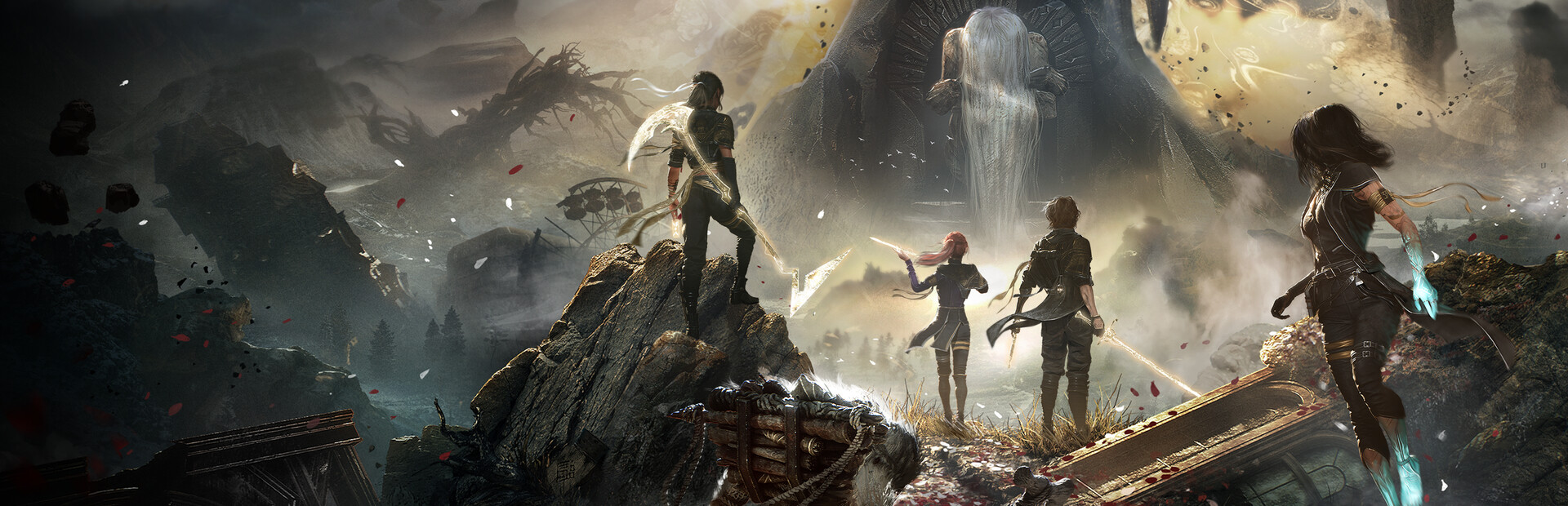
Clair Obscur: Expedition 33. Not The Game Awards. The Indie Game Awards, December 2025: GOTY and Debut Game retracted after confirmed generative-AI use (placeholders patched quickly), a zero-tolerance rule for that ceremony, plus friction over what had been declared at nomination (Les Numériques covers it bluntly). A massively acclaimed game, sanctioned under a binary policy and temporary textures. You can respect an organizer’s right to set rules and still find the spectacle ridiculous. I find it ridiculous. We are no longer judging the quality of the sky; we are judging whether you touched the telescope.
Calibration log
I did not “adopt AI.” I calibrated instruments.

Start: Claude, conversational, almost guilty enthusiasm. Then detachment: artifacts, fluent confabulations, the cost of review. Then tooling: OpenCode, OpenRouter, a swarm called Hermes, a homemade RAG for workshop docs. Serious experimentation. Then abandoning what would not hold operationally, and recentering: Cursor, Codex, written rules, a single session where ideation and code stop lying to each other.
This is not a success story. It is a trajectory of idealization, disenchantment, calibration. Exactly what an astronomer does after looking too fast, mistaking a bubble for a world, and learning to read the glass.
Vibe-coding? A catch-all word. Without discernment, it is high-speed draft production. With discernment (architecture, tests, refusing to sign what you have not understood), it is the telescope. Neither religion. Nor farce.
Production became instant. Telling the sky from the glass did not.
Sources
- Underscore_: We’re no longer paying developers to write code (guest Quentin Adam, Clever Cloud). Agent/orchestration shift, end of “lines of code” as value, architecture & validation role (craft portion; geopolitics left out here).
- Steamworks: Content Survey, Generative AI section. Disclosure of generative content players consume; efficiency tools outside the focus.
- The Verge: Indie Game Awards retract Expedition 33 prizes over gen AI. GOTY / Debut Game retraction (Dec 2025).
- Les Numériques: Clair Obscur loses an award over AI use. French roundup of the Indie Game Awards affair.
- TheGamer: ~1/4 of Gamescom ONL 2026 reveals tied to AI. Press estimate, not a Valve/Gamescom census.
- Thony Christie: Refusing to look. Historical nuance on the “refused the telescope” anecdote (Cremonini / Galilean reception).
- Giuseppe Bertini: fresco of Galileo and the Doge. Public-domain reproduction (PD-Art).
- Sailko: Galileo’s telescopes, Museo Galileo. Photo CC BY-SA 3.0.
- IGDB press kit: Clair Obscur: Expedition 33. Key art Sandfall Interactive / Kepler Interactive.

